


Unlike French-speaking West Africa, Mexico is home to far more Canadian miners and developers. A lot more assets and wealth are at stake here.
With every passing year, Mexico sinks deeper into the grips of the narcos. These criminals are so violent and brutal that they make the Sicilian mafiosos look angelic and kind by comparison.
What was once peaceful, promising terrain for Canadian juniors is now tricky territory, fraught with hidden dangers. The cartels’ influence lurks just below the surface.
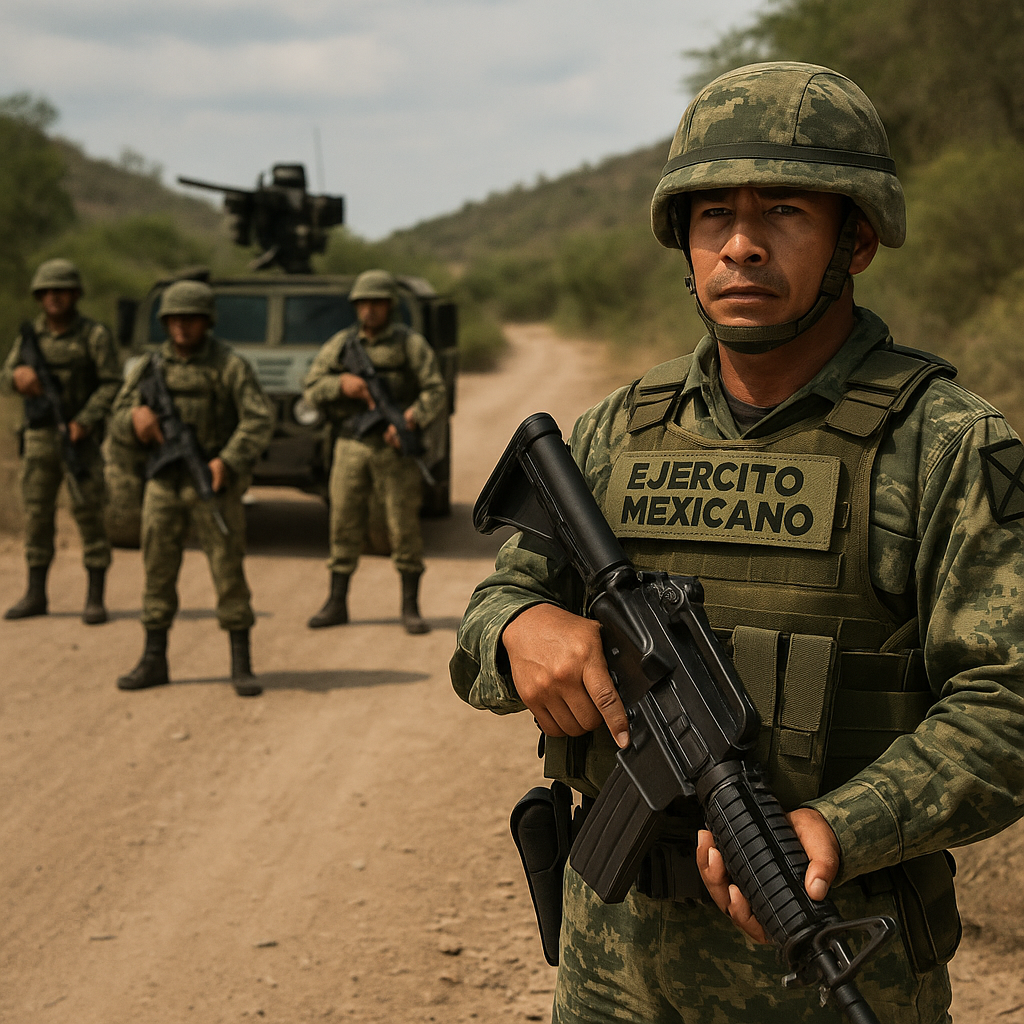
As a result of lax U.S. gun control laws, the cartels are able to get their hands on powerful weapons. Their arsenal rivals that of the world’s best equipped militaries in the world. When it comes to firepower, the municipal and state police forces are simply no match.
For executives travelling to Mexico, kidnap and ransom (K&R) insurance is expected.
It came as no surprise that in the last few years, more Canadian miners have reduced their exposure to Mexico.
Recently Equinox Gold indefinitely suspended their only mine in Mexico. Officially, this was because they were unable to reach access agreement with one community.
Is this a sign of things to come?
The mine is situated in Guerrero, one of the poorest states, long plagued by violence, lawlessness and cartel impunity. Aside from mining, agriculture, and some manufacturing, opium and marijuana cultivation is also a major industry there.
Just over a decade ago, on the order of a cartel boss, corrupt police arrested 43 college students passing through the state on a bus trip, handing them over to the narcos. All were murdered. Their bodies disappeared. Incinerated!
A New York Times investigation examining a treasure trove of wiretaps revealed that government officials, from the very highest to the lowest, including the military, knew what was happening in real-time, but did nothing. They were, as the newspaper put it, the cartel’s “full-blown employees.”
The stark reality is, the cartel “has burrowed into every corner of life in its stronghold in Guerrero.”
These unfavorable conditions, combined with Mexico’s tough new mining code, completely altered the calculus.
For expats, security for them and their families is exponentially more complex —potentially a nightmare.
Through the grapevine, I know of at least one junior actively seeking a buyer for their advanced-stage asset. It’s located in what used to be a very popular state among Canadian explorers and developers.
Years have passed, NDAs have piled up —no deals yetyet. Coincidentally, the narcos are entrenched in that state as well. Many mass graves have been discovered there; journalists and local politicians targeted and killed.
It’s no wonder that, in recent years, mining assets in Mexico have changed hands at steep discounts.
If your company is heavily invested there, what do you do if one day the narcos come knocking, demanding a “protection payment?”
Resist and risk your team’s safety?
Comply, and pray the regulators don’t find out? A misstep here means years of legal headache.
Cut your losses and sell your asset to those who are more comfortable with accommodating the narcos? (It’s far easier than you’d think—just hand the cash to their Mexican attorneys, label it as ‘legal fees,’ and the auditors will be none the wiser.)
In the end, the decision to stay or to pack up and leave depends on management, their level of ethics, their comfort/discomfort with navigating the gray areas in the pursuit of their objectives.
There are no easy choices —only trade-offs that get worse with time, as the narcos embed themselves more deeply into the structure of Mexican society.
(Hai Van Le is the author of Into the Unknown. The novel tells the story of Jake Hall, a 35-year-old geologist working in Mali when he was held hostage by Islamic fundamentalists. The book’s revised and illustrated edition is scheduled for publication in September 2025. More information can be found at https://haivanle.com)